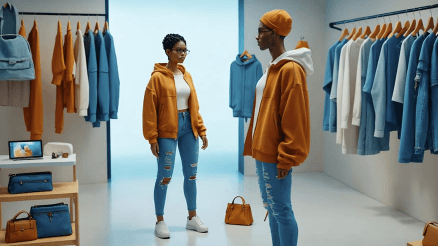

Custom fashion in the digital age blends data-driven personalization with on-demand production. Advanced measurements, AI-generated patterns, and virtual try-ons aim for precise fit and reduced waste. Transparent workflows preserve designer control while ensuring consumer consent and clarity. Sustainable materials and adaptive patterns shorten cycles from concept to wardrobe. The result is scalable, ethically governed design that invites further exploration of how digital tools reshape craft, production, and ownership.
What Custom Fashion Means in the Digital Age
In the digital age, custom fashion refers to sartorial projects that are uniquely tailored to individual measurements, preferences, and constraints, enabled by data-driven tools and on-demand production. This shift foregrounds personalization ethics as designers balance consent, transparency, and control. Digital fabrication enables rapid, precise prototyping, yet demands robust standards to protect artisans, users, and brands in a responsive, freedom-infused market.
Tools and Tech Driving Personalization in Fashion
Tools and technologies propel personalization in fashion by enabling precise measurements, modular design, and rapid iteration. Data-informed workflows integrate AI driven pattern generation to tailor silhouettes while maintaining scalability, and virtual try ons to validate fit before production. This ecosystem supports freedom-seeking audiences with transparent, measurable outcomes, reducing waste and accelerating customization cycles through interoperable platforms and user-centric interfaces.
Designing for Fit, Comfort, and Sustainability
Designing for fit, comfort, and sustainability builds on the data-driven workflows that enable precise measurements and modular design, extending these capabilities to user-centric outcomes. This approach leverages fit analytics to optimize custom sizing, reduces waste through adaptive patterns, and prioritizes fabric sustainability. Quantified feedback informs iterative improvements, aligning personal freedom with responsible production and measurable, durable performance across diverse body types.
Turning Ideas Into Wardrobe: From Digital Sketches to On-Demand Garments
Turning ideas into wardrobe items relies on a disciplined flow from digital sketches to on-demand production, where precise design data informs rapid prototyping and final garment manufacturing.
The process emphasizes modularity, traceable metrics, and scalable workflows, enabling personalized outcomes with speed.
Idea one clarifies concept-to-sample alignment; idea two validates production feasibility, ensuring data integrity.
This framework empowers autonomous choice within measurable, adaptable fashion ecosystems.
Frequently Asked Questions
How Secure Is My Personal Data in Custom Digital Tailoring?
Data privacy in custom digital tailoring varies by provider, but overall measures mitigate risk; however, cyber threats persist. The analysis notes strong encryption and audits, yet residual exposure exists, highlighting ongoing vigilance and informed choices for freedom-seeking users.
Can I Modify a Design After Ordering a Garment?
Yes, it is possible to modify design after ordering, though restrictions apply based on production stage and vendor policy; users may adjust colorway post purchase, reflecting data-driven feasibility and potential timeline impacts for customization freedom.
What Are the Environmental Impacts of On-Demand Production?
On demand production reduces overstock but creates on demand waste and supply chain emissions; data shows nuanced outcomes. Strategic adoption lowers waste, though energy use and logistics remain critical, offering freedom through targeted efficiency and transparent environmental metrics.
Do Sizes Vary Between Digital Avatars and Real Bodies?
Sizes can differ; digital avatars and real bodies often exhibit size mismatch due to avatar scaling variability and measurement assumptions. Analysts note systemic discrepancies, urging standardized sizing protocols and calibration to align avatar dimensions with real-world body data.
See also: The Role of Developers in Blockchain
How Do Return Policies Work for Made-To-Order Items?
Return policies for made-to-order items vary; generally, few exceptions exist, with customization less forgiving. Symbolically, rules act as gates: return policy governs. Custom sizing and digital avatars influence eligibility, but strict criteria remain, protecting brands and customers alike.
Conclusion
Custom fashion in the digital age fuses precise data with on-demand production, enabling truly personalized wardrobes. A single datum—77% of shoppers report better fit with digital measurements—anchors this shift from guesswork to verification. Anecdote: a tailor’s pattern sheet becomes a living code, iterating in minutes via AI-driven adjustments. Metaphor: digital measurements act as a compass, guiding sustainable fabrics toward each wearer’s unique horizon. Result: transparent workflows, modular design, and rapid prototyping converge into durable, ethically crafted attire at scale.